

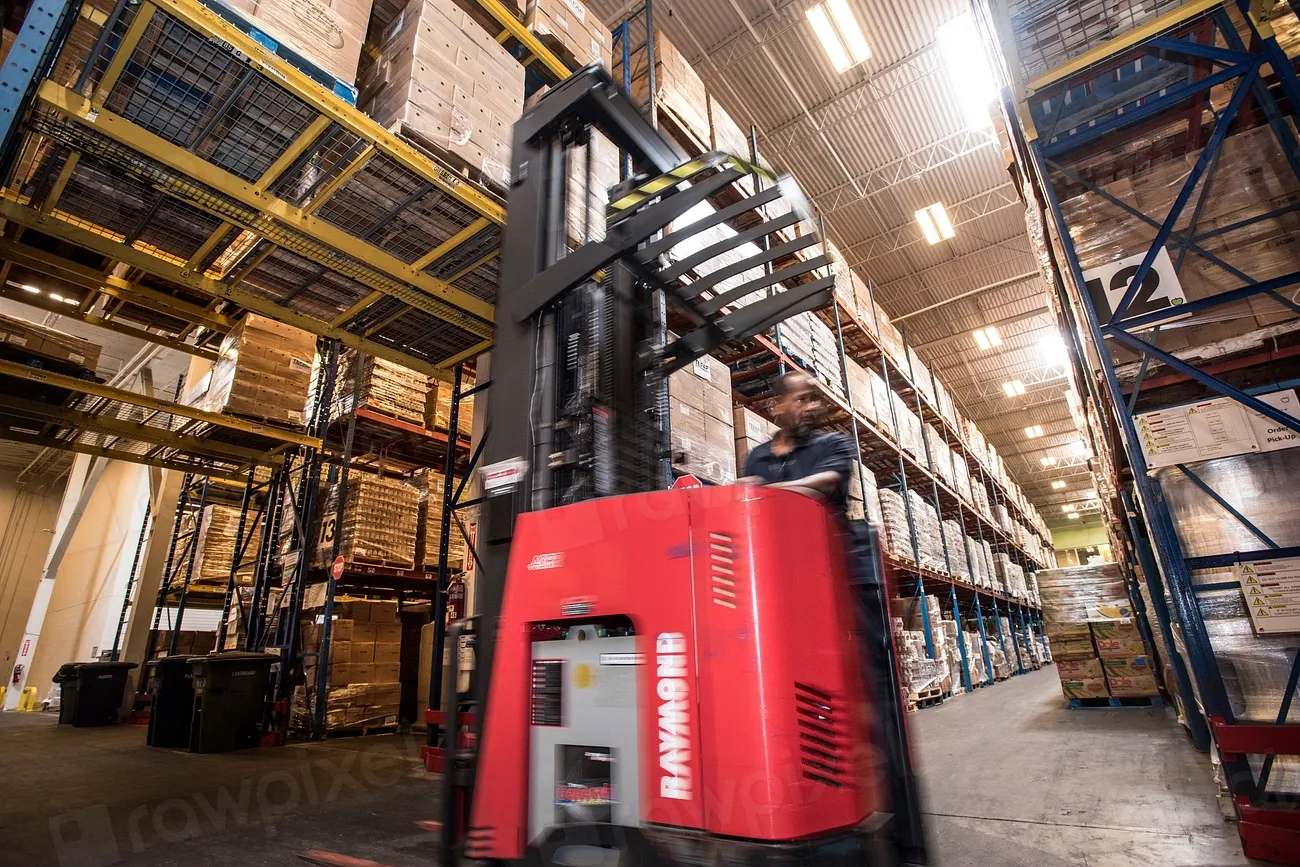
A $287 line reading LUMPER lands on a reefer invoice out of a grocery DC, and nothing is attached to it. A lumper fee is what you pay when the receiving facility won't let the driver touch the freight and puts a third party crew on the trailer instead. It's the one accessorial that arrives with its own primary document, because somebody at that dock handed over a receipt before the driver got the paperwork back. Approve the line without it and you've paid a number nobody in your building can tie to anything.
What your carrier's tariff actually promises on a lumper fee
Read the item before you argue about it. XPO publishes the lumper fee as Item 242 of tariff CNWY 199-AK.2, effective May 18, 2026, under code LSO at pickup and LSD at delivery. The item is written as a straight pass-through: "Carrier will be reimbursed by Shipper for any and all lumper charges incurred by Carrier," with a per shipment processing charge of $11.60 added on top. The tariff even does the arithmetic: a $200 unload bills out at $211.60.
Two things there matter more than the $11.60. "Any and all" sets no ceiling. And the item's silences do the rest of the work: in the same tariff's free time table, detention with power gives four hours before charges accrue, while the column next to the lumper fee reads "No limitations." No free time, no cap, and no sentence anywhere conditioning payment on the carrier producing the receipt.
So the receipt requirement isn't coming from the tariff. If it isn't in your carrier agreement either, you've agreed to reimburse an uncapped third party charge on the carrier's say-so. Plenty of shippers have, and most found out during an audit rather than during a bid.
Where the statute puts the cost
49 U.S.C. 14103 has been on the books since the 1980 Motor Carrier Act. Subsection (a), captioned "Shipper Responsible for Assisting," provides that when a shipper or receiver requires the person who owns or operates the vehicle to be assisted in loading or unloading, "the shipper or receiver shall be responsible for providing such assistance," or for covering the cost of arranging and paying the people who do it. Subsection (b) makes it unlawful to coerce a carrier or driver into that work, or into paying someone else to do it.
The reading for a shipper is clean, if not comfortable: the cost lands on you. Which is why we'd call it a wasted week to argue that a lumper shouldn't exist at a grocery or club store DC: the receiver sets its own unloading policy, and you'll want that goodwill in February when you need an appointment. Argue the number and the evidence instead, which is where the recoverable money sits anyway.
The prorated lumper nobody at your company ordered
LTL changes the shape of this. Day & Ross prices a lumper fee at a $35.00 minimum per shipment on its domestic accessorial schedule dated January 2026, "subject to prorate of entire Lumper Fee and all shipments on the trailer." The same schedule bills extra labour including lumper service at $50.00 per hour per person, minimum $200.00 per person. The dock charged once for a trailer carrying a dozen bills, and your four pallets came back holding a share.
Nobody at that facility wrote your PRO on anything, so the match you'd run on a truckload isn't available to you. Ask for the trailer level receipt and the prorate basis when the amount justifies it. At a $35.00 minimum it rarely does, and the analyst hour costs more than the credit.
What the receipt has to show
The document is the unloading vendor's own form, a carbon or a thermal slip. The fields you need are the same whoever printed it:
- Facility name, plus the date and clock time of the unload. Match that time to the delivery receipt, not the appointment you booked.
- The PO, load or appointment number, matched to the BOL.
- Quantity handled, in pallets or cases, and what was done to it. A straight unload and a restack are different jobs at different prices.
- The amount and the instrument behind it: a Comchek or EFS express code, a Relay transaction, a card authorization.
- The vendor and its location code; the national unloading companies price by site.
Quantity is the field everyone skips. Teams tick the dollar amount and move on, and the count is what catches a receipt that actually covers a trailer you shared, or a restack billed through as an unload.
One more thing on the money instrument. A Comchek or EFS code issued at the dock authorizes up to a limit, and the amount drawn against it isn't always the amount authorized. Invoices get built from the authorization. The settlement record is the control, and most shippers have never thought to ask for it.
The six shapes a bad lumper line takes
Six patterns, most common first:
- A markup on the pass-through. Receipt says $200, invoice says $240. Item 242 authorizes no percentage; the only uplift it names is a flat $11.60.
- Double payment under a national account. You already pay the unloading vendor directly for that DC, the driver paid at the gate anyway, and the carrier billed it back. Both documents are internally correct, which is why this one survives an audit. It behaves like the duplicate freight invoice that doesn't look like a duplicate.
- One receipt against two PROs. Common on multi-stop reefer runs where one unload covered two of your orders.
- A lumper billed on a drop and hook. The driver dropped the trailer and left, and the building unloaded on its own clock. A receiving charge may well be owed under your warehouse contract. It isn't a carrier accessorial.
- A lumper code and a driver assist or driver unload code on the same stop. Both can't be true.
- A receipt dated the day after the POD, or carrying a PO that belongs to a different order.
Why we short-pay instead of disputing
The position we'd defend in front of a carrier rep: short-pay the lumper line and release the rest of the invoice on the due date. Once a lumper fee is paid, it stops being an approval decision and becomes a claim, and a $287 claim on a load that delivered in September gets worked in whatever order claims get worked. Thirty days is the optimistic estimate. Holding $287 against an otherwise clean invoice usually produces the receipt inside a week.
The trade-off is real. This only works if your agreement says so, otherwise you're the one out of compliance with payment terms, and your rep will put that in writing. Add the sentence at the next bid: lumper charges reimbursed at actual cost against a legible receipt identifying facility, date, PO and quantity handled, plus the carrier's published processing fee, with no percentage markup. The clause costs nothing at the table, because no carrier wants to defend the alternative out loud.
What the short-pay email says
Five lines, and name the item. "PRO 4471329, invoice 88-2210. Short-paid $287.00, lumper service under Item 242. No unloading receipt on file. Release on a receipt showing facility, date, PO 88421 and pallets handled. Balance remitted in full today." Nothing about policy, nothing about the last six invoices. A rebill clerk can action that in a minute, and the specificity is what keeps it off the general queue, the same way it works on a detention charge that has to prove itself.
The query to run this week
Pull every lumper line from the last ninety days, group by consignee, and count how many carry a document of any kind in your audit system. Not a matched document. Any document. That fraction is the ceiling on how much of this spend you could defend today, and the first look usually lands lower than the team expected.
Running the match before approval rather than after is what automated freight invoice audit is for: pull the receipt, compare amount and quantity against the BOL and the POD, and hold the line when they disagree rather than routing it to somebody who'll approve it at 4:50 on a Friday. Grocery and protein lanes pay back fastest, the usual shape of freight audit for food and beverage shippers. Bring ninety days of lumper lines to a walkthrough and we'll run them against your own receipts.
Frequently asked questions
- Who is responsible for paying a lumper fee?
- 49 U.S.C. 14103(a) puts it on the shipper or receiver. When a shipper or receiver requires the owner or operator of the vehicle to be assisted in loading or unloading, that party is responsible for providing the assistance or for covering the cost of arranging and paying the people who perform it. Subsection (b) makes it unlawful to coerce a carrier or driver into doing the work or into paying someone else to do it. In practice the driver fronts the money at the dock, the carrier reimburses the driver, and the charge reaches you as a line on the freight invoice.
- Can I refuse to pay a lumper fee with no receipt attached?
- Your carrier's tariff probably doesn't require one. XPO's Item 242 in tariff CNWY 199-AK.2, effective May 18, 2026, says the carrier will be reimbursed for any and all lumper charges it incurs, and attaches no documentation condition. A receipt requirement has to come from your carrier agreement instead. Add a clause reimbursing lumper charges at actual cost against a legible receipt showing facility, date, PO and quantity handled, and you can hold the line without breaching your own payment terms.
- How much does a lumper fee cost, and what gets added on top?
- The lumper's own price varies by facility and by what the crew does, and the carrier passes it through. XPO adds a per shipment processing charge of $11.60 under Item 242 and gives a worked example of a $200 unload billing out at $211.60. On the LTL side, Day and Ross prices a lumper fee at a $35.00 minimum per shipment on its domestic accessorial schedule dated January 2026, and bills extra labour including lumper service at $50.00 per hour per person with a $200.00 per person minimum.
- Why did a lumper fee appear on an LTL shipment I never requested?
- Because it was prorated. Day and Ross states that its $35.00 per shipment minimum is subject to prorate of the entire lumper fee across all shipments on the trailer, so one unload at one dock is divided among every bill riding that trailer. Your PRO will not appear on the receipt, which makes the usual one receipt to one invoice match impossible. Ask for the trailer level receipt and the prorate basis when the amount justifies the time.
See it on your freight
Stop Overpaying On Freight Invoices
Penny checks every invoice against your contracts and what the shipment actually did, then disputes what doesn’t hold up. You pay 30% of what she saves you, and nothing if she saves nothing.
Found this useful? Share it with your team.
Share on LinkedIn